
My friend told me this story she heard in a talk a little while ago. I keep thinking about it. Especially when I think about the “locus of control” and learning to let kids lead.
Handing over the baby
There was once a family trying to escape a terrible situation during World War II. Through some sort of miraculous means they were able to escape a dangerous situation and had to be on the run to a secure spot for safety. As they ran, the grandfather ‘s fatigue started to take over. As he was heaving for breath, his daughter begged him to keep going, cheering him on as they ran. Despite her encouragement, the grandfather started to feel like he wasn’t going to make it. He didn’t want to risk putting the rest of the family in harm and decided to sacrifice himself to save the others. He and his daughter exchanged desperate pleas: she pleaded for him to keep running, he pleaded back for her leave him to save herself and the rest of the family.
So finally she stopped and told him if she was to leave him she wanted him to at least say goodbye to his granddaughter, her baby she was carrying. She carefully handed him that baby and then turned and continued to run. This had the effect the daughter had hoped for. There was no way that grandfather was going to stop if he had to get that baby to safety. So, on newfound adrenaline, he ran with all his heart. And the whole family was able to make it to safety.
The point of that story is that sometimes handing off the responsibility makes all the difference in motivation and drive. Sometimes as parents we need to “hand off that baby” a little more often. We live in a generation of coddlers, so tethered to our children, often even into teen and adult years.
What is the Locus of Control?
My brother Tal has a masters degree positive psychology. I love that he taught me about the “locus of control” which is defined by Psychology Today as “an individual’s belief system regarding the causes of his or her experiences and the factors to which that person attributes success or failure.” I like this little diagram I found online to explain it a little better:
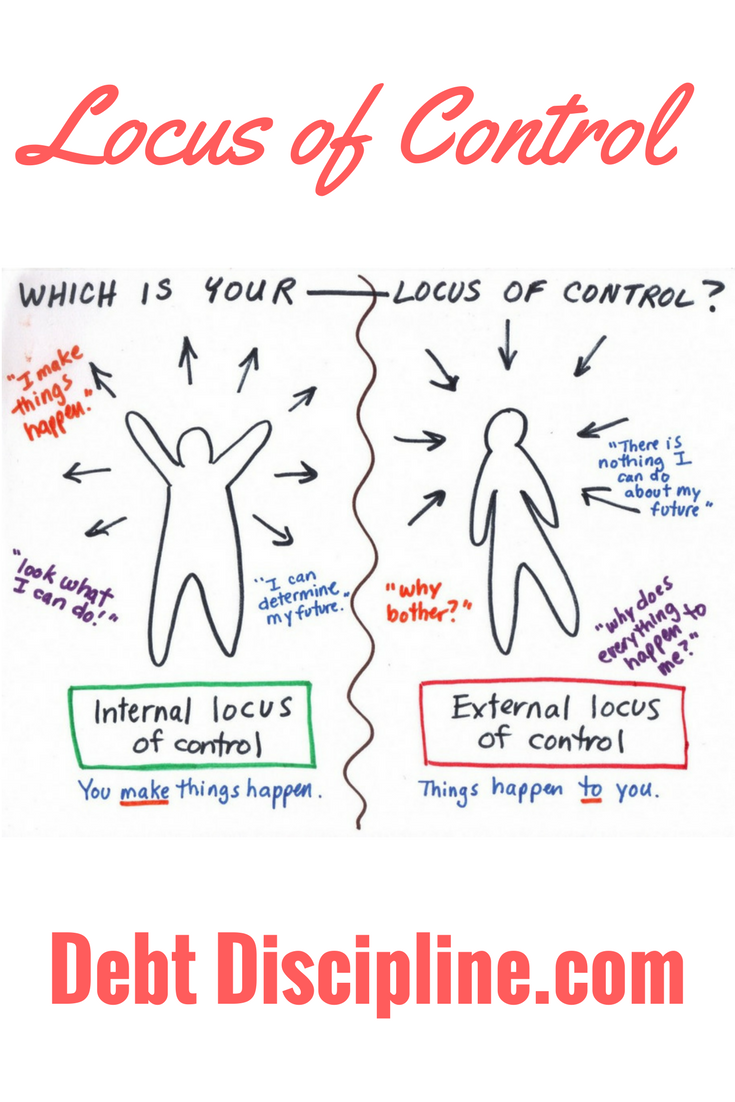
Sure it’s from debtdiscipline.com, but my brother described it more in terms of parenting which, of course, I loved. (We had this discussion after my little class about raising teenagers ….and I think that wise brother of mine will be doing a guest post on this blog about this some time soon.) Anyway, the idea is that our job as a parent is to help shift the “locus of control” in our children from an external source (their parents) to an internal source (themselves) as they grow and mature.
We live in a coddling society
I think so much more than ever before, we live in a society that just keeps “carrying the baby” ourselves. We coddle our kids in ways our grandparents or even parents never even thought of. Sometimes it’s so hard to let them come up with answers to their own problems. And really, what is the balance? We are the parents after all. Shouldn’t we help guide and direct our kids? That’s our job, right?
But I think we overstep our bounds far too often. We are so worried about everyone “feeling good” and being politically correct that we are losing sight of the fact that those kids of ours become stronger facing tough things.
Oh I’m generalizing, of course. We’re still turning out plenty of resilient, hard-working, accomplished human beings. But there is SO MUCH going on to distract kids from just working hard these days. And we are so careful to help make them shine.
What I learned about parenting from Mao’s Last Dancer
I just finished reading Mao’s Last Dancer (loved it), and man alive, I sure thought a bunch about this while reading that book. It is a true memoir about Li Cunxin, an eleven-year-old boy in impoverished rural Cultural revolutionary China who is selected to be a part of the Beijing Dance Academy. There is so much to talk about from that book, but for today I’ll just say that this kid was taken from his family and he was definitely “given the baby.” He had to choose whether he was going to survive or thrive at such a young age, far away from his family. No coddling going on there. Through a series of events he took on that internal locus of control and decided he was master of his own destiny. He worked his tail off through all different obstacles and made something pretty amazing of his life.
Li did an interview with the New York Times a while back, and I thought this part was super interesting:
KINETZ — You still teach at the Beijing Dance Academy from time to time. What has changed?
LI — They really can get access to some of the best Western choreography and the students don’t have the same work ethic anymore.
KINETZ — Why?
LI — People have a lot more opportunities. So if it gets too hard they just back off. It’s not the same desperate situation.
I just thought that was interesting. Do we need more “desperate situations” in life? Do we need to, like my mom used to say “hire a wolf to knock at the door”?
I don’t know. Just something I’ve been thinking about a lot lately and I love to discuss.
Some ideas to help shift that “Locus of Control”
Some notes I’ve taken over the last few months to try to remind myself, totally random but want to keep them all together here, take them for what you will:
Teach kids that they are “self-appointed agents.” THEY are in charge of their destiny. They are not victims of circumstance. What they do right now determines what doors will be open for them.
Change thoughts from “I”m so proud of you!” to “You should be so proud of yourself!”
Tell them things so they’ll tell you things.
Connection is the best app. (yeah, that one’s kind of random, especially when I’m talking about “letting go,” but there’s something about making sure your kids feel that love and connection somehow as they make their own decisions). Li sure felt it even so far away from his family. It was that connection he had with his family, their love running through his blood, that helped him survive.
A big decision for Claire changing the Locus of Control
Dave and I are trying to find a balance with all this as all our kids are growing up. One little example as of late: I had all kinds of inner turmoil about volleyball club tryouts, a parent meeting, all kinds of little things were coming together to help me wrap my brain around the fact that this was happening (club volleyball to take my girl away from me a LOT, even a little bit of Sunday play which we have never had to grapple with before, some loss of balance, etc.).
Claire and I had some good conversations as the decision awaited. There are so many more options with girls volleyball than there are with boys! SO much more competitive and intense, at least at the high school level. One of those talks was all three of us (Dave included) sitting on the kitchen counter talking through all the pros and cons, and another I really loved was baking something or other in the kitchen one day talking about how the locus of control is shifting over and encouraging Claire to reach Up as she made her own decision.
Because the final decision really had to be hers. She was the one who would be putting in the work. She was the one who would be pulled much more than we would.
She felt pretty calm about it the whole time though, and when it came to tryouts on Saturday she signed on. The Platinum 16s team with ten of these other girls who are really talented and really kind.

We knew this was going to be an adventure, and so far it has delivered!
Celebrate when our kids’ locus of control starts to shift
As a parent I sometimes think I have all the answers for my kids. But then it’s pretty awesome how this peace can come over you if you let it. If you step back and realize that yes, you are “working your way out of a job.” And you’ve got a daughter standing there in front of you who makes some pretty great decisions.
Oh, some will backfire to be sure. And our kids will learn from them. Others will make them soar. And you get to stand aside and watch and love.
…And try to figure out where in the world you should step in and where you should back off.
Oh, parenting is tricky. But I like thinking of handing off that baby more and more often as my kids grow.

Oh my this is good! Although my son is an adult with a small family of his own, as a mama control issues can still rare their ugly head! Thank you so much for providing sound reason that I can reread as much as needed as soak more in.
I love this! It’s hard. We too recently went through the Club Volleyball thing. Our Sunday plays were definitely more frequent than it sounds Claire’s are. We actually said no. We don’t play Sundays. There is not much we can be always right about , but for us, that was off the table. It made the decision easy for our minds not for our hearts and our kiddos. She’s still young though and sometimes we do have to make those decisions.
I think of my oldest who is 16 and it’s hard , really hard to let them make mistakes but I know it’s a part of the real world. I remember when we got married, we didn’t have parents paying tuition, housing, food, vacations etc.. we shared a slurpie because we couldn’t afford 2!!!! I know that made us stronger but the thought of my kids going through that makes me want to immediately jump in and help !! .. so hard!!
“we shared a slurpie because we couldn’t afford 2″….what a great statement….my children have never known that and not even as an adult…but those lessons make the difference in “wants’ and “needs”….thanks for sharing that….
Since she can now drive it really doesn’t require much from you. You will still be free to see her brother play out of state and visit her sisters out of state. And she will be occupied all the time.
I would hate to be that helpless baby. The grandfather sacrificed himself for his daughter and grandkid and the mom discarded her baby. How is she the hero? What does it have to do with your letting your daughter play sports which has been pushed all her life to participate and excel in even if it means overextending herself with time commitments? It’s not a life or death situation.
I don’t think the mother abandoned her baby, she left her with the grandfather to remind him that he is capable and needed in their family. I think the baby in this metaphor can represent responsibility, like Shawni is talking about, but it also can represent service. Sometimes people need to know they are needed in order to take control of their life and serving others helps them realize that and gives them motivation to keep going when things get tough. It is a thought provoking story, so I’m glad she shared it, regardless of how it applies to her own family.
And adult child responsible for a baby in a life or death situation where timing is everything stopped to teach her aging father a valuable lesson? Perhaps she should have already learned the lesson of responsibility for her child and obedience to her father. In the story it wasn’t the mother leaving her baby that was the one learning something and gaining new insight. It was the person she abandoned the baby who learned the lesson, her father in this story. Is the point to trust the world with your child by letting them go in adulthood? That the world needs to provide an act of service to protect our kids? The mother handed over responsibility which is a current situation today and not great imho. And her priorities were backward. Maybe she handed her responsibility cause she thought she isn’t capable of raising the baby without the grandparent? Our generation was either raised by grandparents or we were home alone after school. We may also have gone back and forth between parents due to divorce and the first generation of coparenting and constant trading off of responsibility. When we became parents many became helicopter and lawnmower parents to make up for the absences and trading off of parenting that was our experience. In the story the mom is passing over her responsibility to her dad who quite frankly has a lot on his plate at that moment worried about the safety of the entire family and he was completely selfless having led a good life. The mom seems a boomer and the grandpa a member of the silent or great generation and the baby is genX.
I took something completely different away from that story. I viewed it as an ultimate act of service and love towards her father. She knew his heart. She knew that he would do anything to protect that child. In his physical weakness, when she was unable to carry him herself, she gave him the only thing she had that would allow him the strength and courage to keep going. In giving him her baby, she saved his life.
This is how I saw it too
I think I realized why I see this story differently. I’m Catholic our faith focuses on sacrifice, suffering, selflessness, helping the week and no greater love than laying down one’s life for a friend. Members of the COJCOLDS, gosh that is long, are about perfecting themselves, perfecting those around them, successful outcomes and prosperity. We all believe in God and Jesus of course. That is why I understand the grandfather laying down his life and find that the main focus of the story. And the rest of you think during that moment of life of death escape from certain death she was improving her father.
I believe all Christian faiths focus on the attributes you listed. If the situation were different and the daughter knew that there was no way the father could make it, I think she would have accepted his gift of laying down his life for the good of the group. But, in this particular situation, she knew his gift of laying down his life wasn’t necessary. He didn’t need to die, because there was a way for him to keep living.
The analogy I’m making is simply about responsibility, service and love. Thank you for all the thoughtful comments. Just a story to illustrate my point that I really liked.
That’s the way I saw it too! And I’m catholic, not that it makes any difference!
I couldn’t say it better, thanks Courtney. xoxo
I’ve been reading your blog for a long time and you’ve inspired me to reflect on and share my own experience a bit. I’m a millennial and don’t have kids yet, so I’m coming from a different angle.
I’m a bit reluctant to be overly critical about generational differences. It’s such a fraught topic. I know that my parents emigrated and struggled terribly in the hopes that their children wouldn’t have to suffer the same way. It’s a natural instinct to want a better, less painful childhood for your children than your own when you’ve endured difficult experiences. At the same time, my parents were frustrated and sad that my siblings and I missed out on many positive aspects from their culture, like a much stronger sense of community. My mom was shocked when I’d see my grade school peers at the grocery store and we would recognize but not acknowledge one another because we had never interacted before at school, either. The social dynamics of school were wildly different than what she’d experienced and she couldn’t relate or fathom the difference.
I think there’s a risk of passing down guilt or shame in these circumstances, like the old “Don’t you understand what I’ve sacrificed for you?” or “Back in my day, it was 10 times harder to…” or “You don’t appreciate how much…” type guilt trips. I also think in a lot of cases, parents underestimate the hard things their children are going through because they’re looking at the experiences from their perspective, through the lens of their own childhood struggles that were different and don’t line up the same way. In a hyper-competitive world, there is no shortage of struggles children are facing or will face. I’d be afraid of devaluing the experiences of children because they don’t directly compare to their parents’. I’d be very reluctant to suggest that you’d need to “hire a wolf to knock on the door.” Life is guaranteed to hand everyone plenty of challenges to face. I’d suggest perhaps instead maybe directing attention to helping others tackle the hard things life has thrown in their paths.
I also have a question. What do you mean by “politically correct”? I feel like everyone means something different when they use that phrase. I understood it to mean that people are afraid to accidentally offend someone. Is that how you meant it?
Great points! Everyone certainly has their own struggles, and everyone is coming from such different vantage points and those things are never to be undervalued because that’s what we learn from, personally and in our own way. My points are quite generalized because that’s just what I”ve been thinking about lately from my own varied experiences. Just lots to think about, you know? I’m reading a book right now called “The Coddling of the American Mind” that is so interesting on this topic and it’s got me thinking as well.
And yes, I mean politically correct to mean we are sometimes so worried about accidentally offending people that lose our authenticity. I think I’ve done this a little bit on this blog, actually. Sometimes I try to tiptoe around things because I don’t want to offend anyone, but really, in some ways, if no one is offended that means you’re not really standing up for anything. Sure it’s great to keep the peace, but it’s ok for everyone to be coming from different vantage points because we just are. And that’s where we learn when we connect to try to figure it all out. So thank you for sharing your vantage point! I appreciate it!
The thing about avoiding being “politically correct” is tricky because a lot of times it’s used as an excuse to say something painful to another. I think one thing that is very helpful when thinking about a “PC issue” is the balance of power. If the balance of power is even (as young athletes competing against each other in some sort of race) I don’t think it’s important to be PC; there can be a winner! If however, you’re speaking about or to a person or community that is less powerful, or is other wise marginalized, I do think it’s right be to be super mindful of not causing offense.
Very good differentiation, Jenny, thank you!
I needed to ponder about all of this today. Thank you! The visual and desperation of that initial story is so clear. I value that sacrifice as a parent – it is excruciating and I often wonder (as I’m sure the daughter did) “was that a wise choice?!?”. In spite of my questions and anxiety about “handing over the baby”, I have never felt more at peace than when I remember ( continuously) to look UP. Sometimes His direction is small and seemingly insignificant, and other times it can be as drastic and “crazy” as “hand over the baby”. When we follow with exactness – we are often given a front row seat to witness miracles amidst the struggle. The miracles we would have missed, had we chosen otherwise. Thank you for the reminder and for the reason to ponder more deeply about that.
Beautifully said, thank you Jessica. xoxo
Thanks for this post. It definitely gives me some food for that as I too struggle to find the balance between loving, leading, and letting go. Motherhood is an emotional job!
I always enjoy hearing your motherly wisdom. Thank you for sharing it with us. Being a parent is definitely tricky and I’m glad you share what you’ve learned and what is working for you.
In my mind she handed over the baby with complete faith in her father. She KNEW he would follow – all he needed was a PURPOSE to keep going. Feeling like we have a purpose is an essential part of life – especially during trials. ❤️ very cool story and love your thoughts.
Thanks for sharing your points of view. I learn so much from blog readers!
xoxo
Just what I needed!! Thanks for sharing!